justlikeaforest//
Faced with the inevitability of a warming climate, this project was charged with the design of a tree research facility to assist in tackling the growing issues faced by the world over. The facility would conduct research and experimentation to develop a currently non-existent tree species which could specialize in weathering one or many aspects we are currently facing via climate change: drought, heavy rain events, warming climate, chemical mediation, among others. Sited along a bustling boulevard in the nation’s capital, the building would be situated with other institutional federal buildings which are focused on resource extraction, rather than resource protection and stewardship.
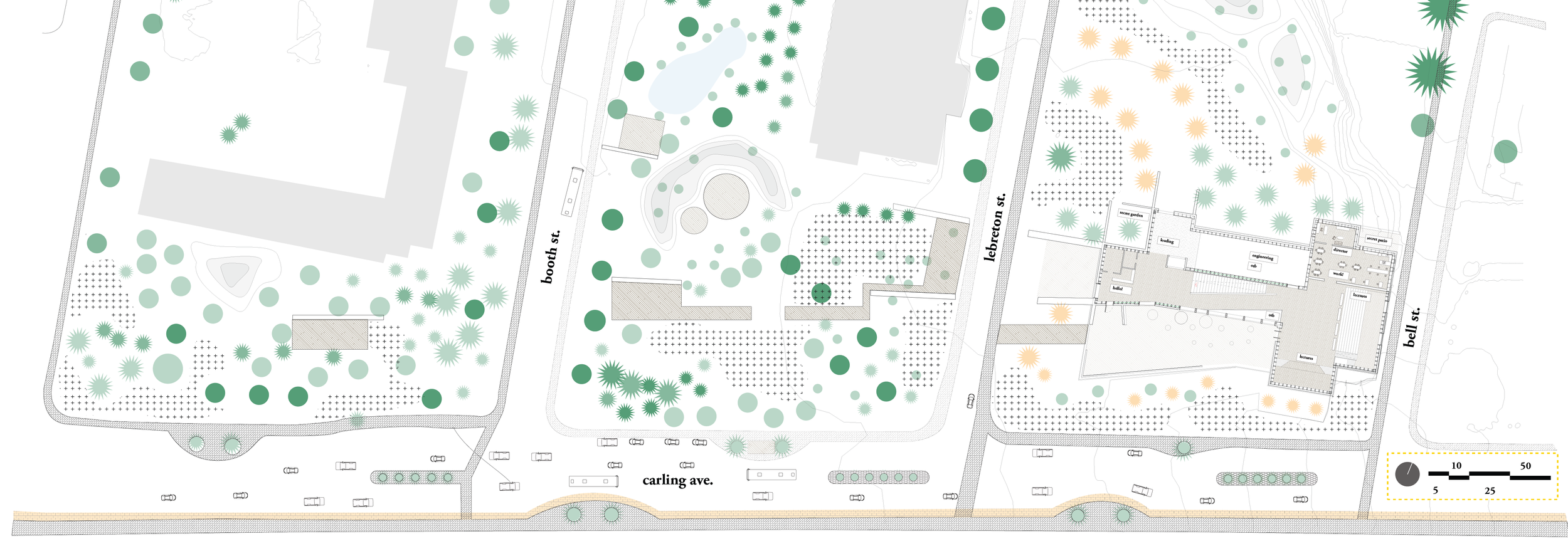
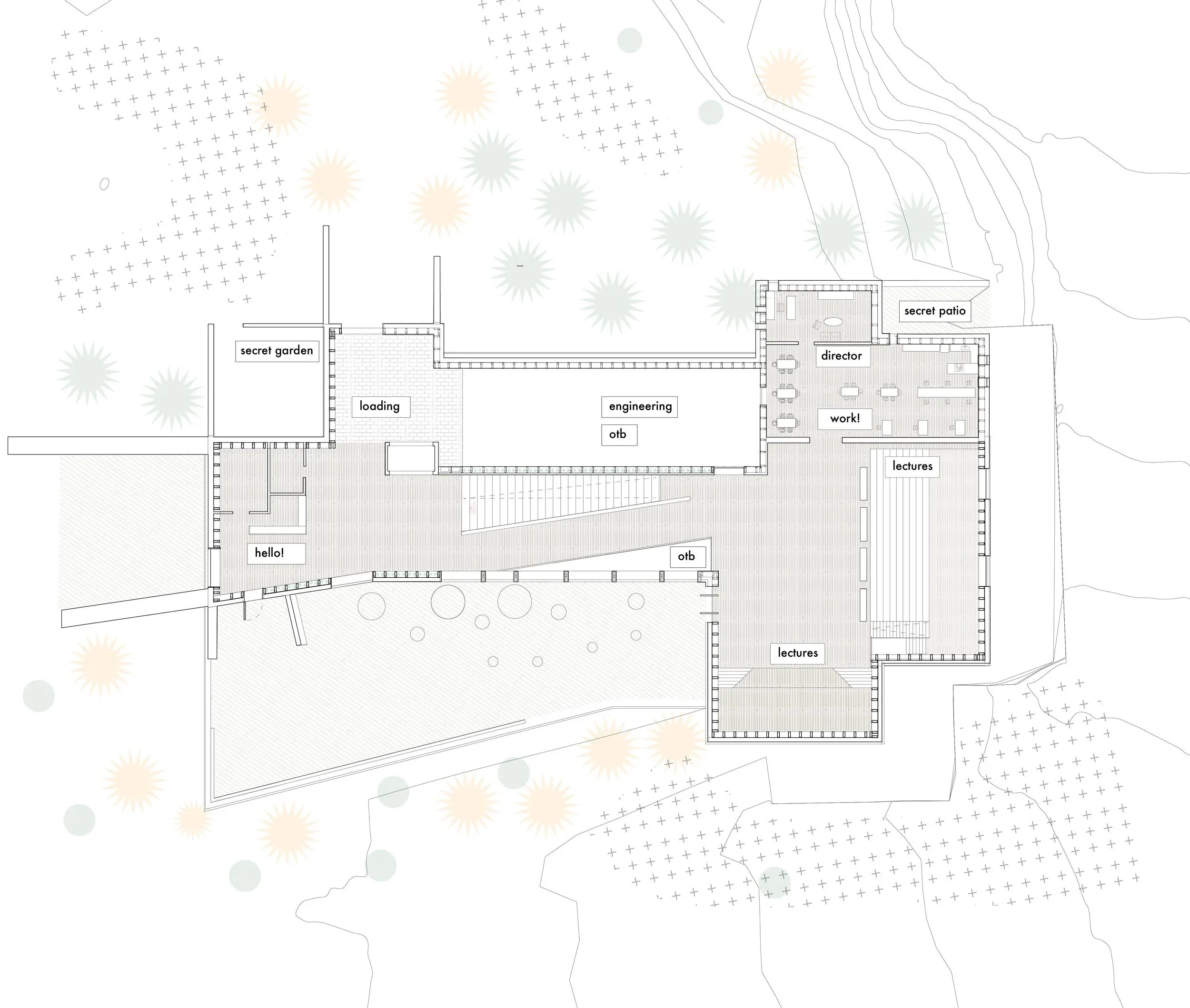
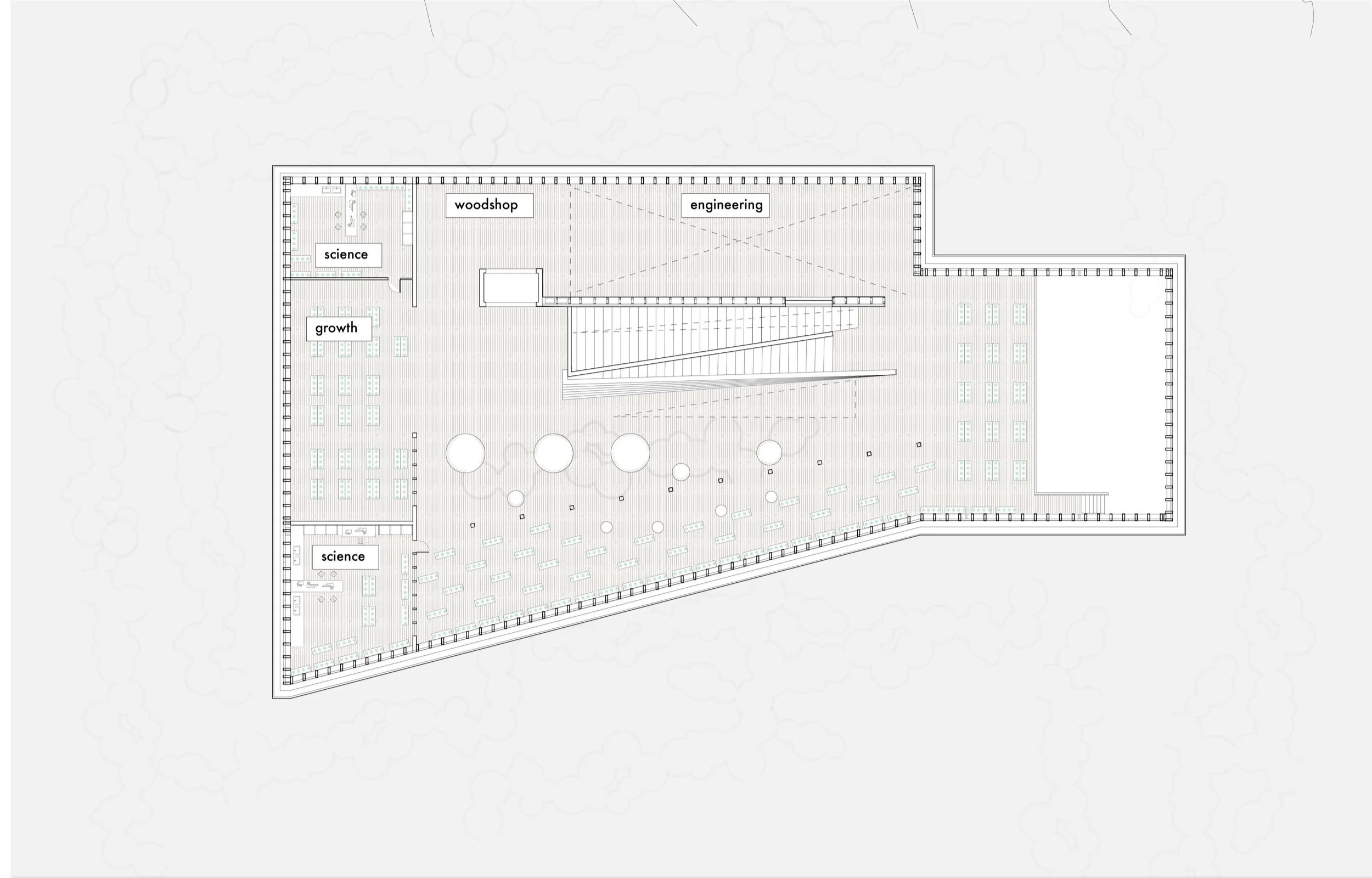
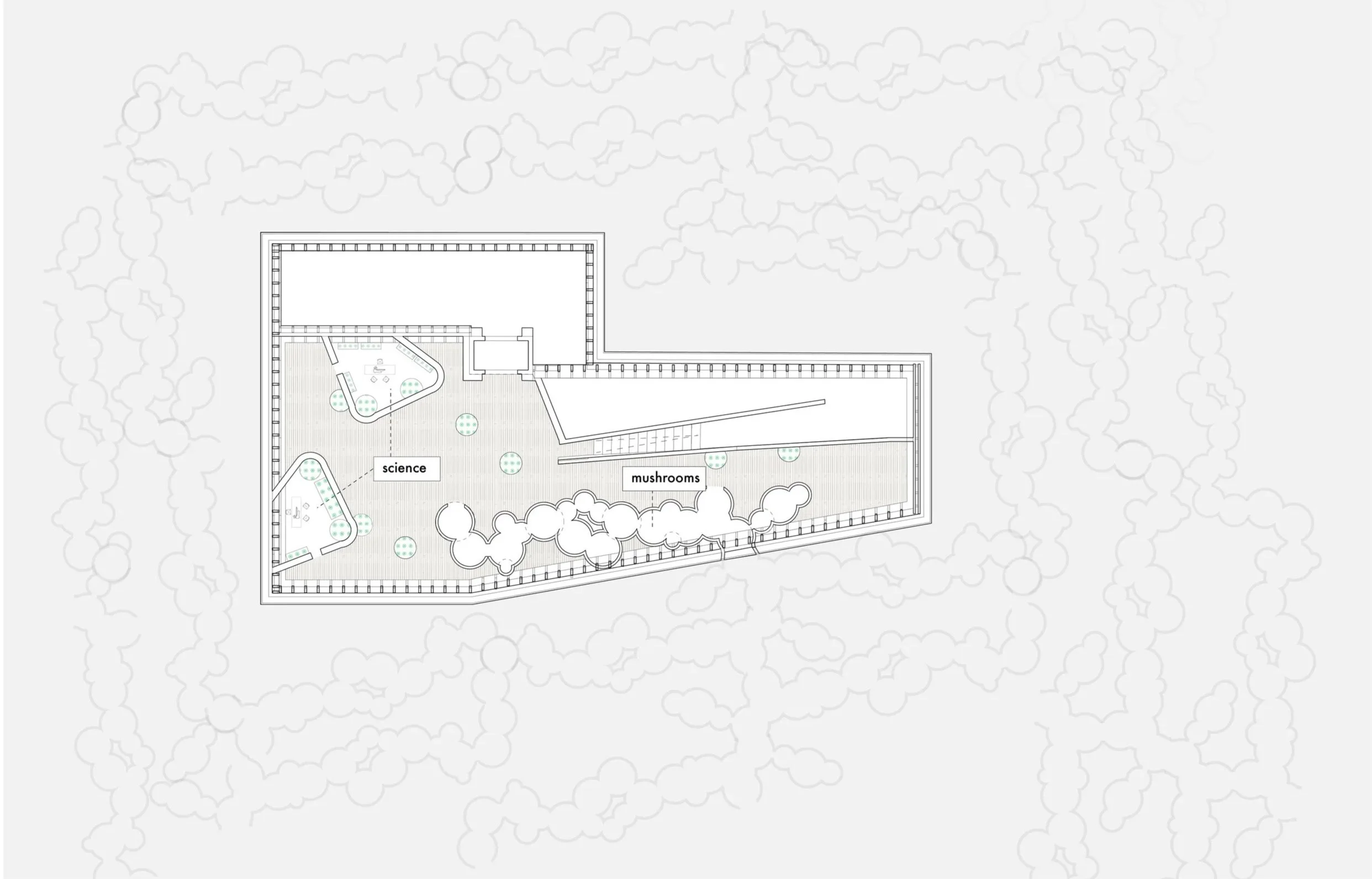
The beginnings of this project focused on prospective climate envelopes and the resultant tree species migration we will be faced with over the course of the next 100 year cycle. It revealed many indigenous trees would likely die out, with a select few expected to prosper. An examination of forest life cycles and a deeper understanding of forest succession followed and would prove to be the major design impetus for this project. What these investigations revealed was a highly structured, complex and complimentary system in which forests operate. First, a destructive event clears a forest, or section of forest into a glade. Depending on the scale of devastation, a repopulation of life can span months to several hundreds of years. Beginning with lichens, mosses, and mycelium, the scorched earth is transformed into fertile soil once again through the fracturing and sedimentation of rock. What follows is the visible beginnings of a forest with short lived pioneering species who within the span of 30 years will live and fall contributing to the soil, nurturing the following cycles. The roles in which trees play in the life cycle of a forest are highly specialized and it begged the question, can their specialization be employed architecturally, sustainably, and responsibly?
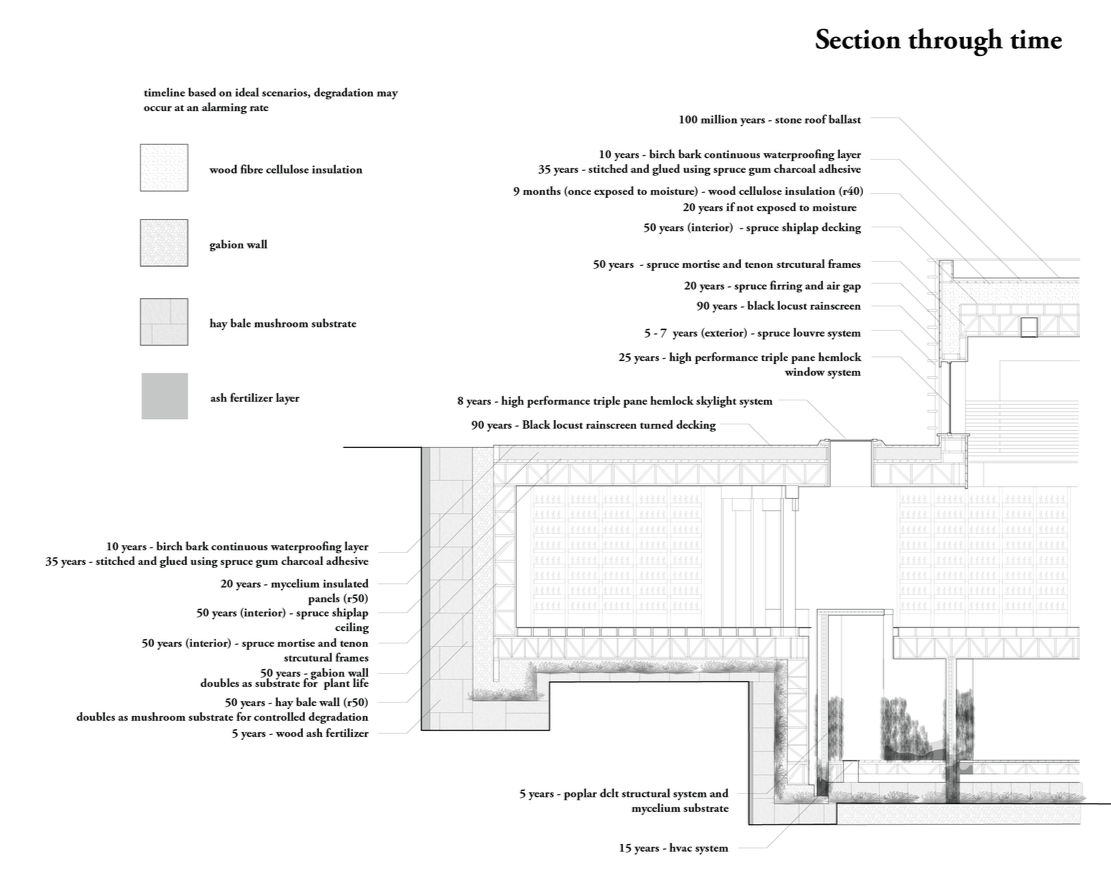
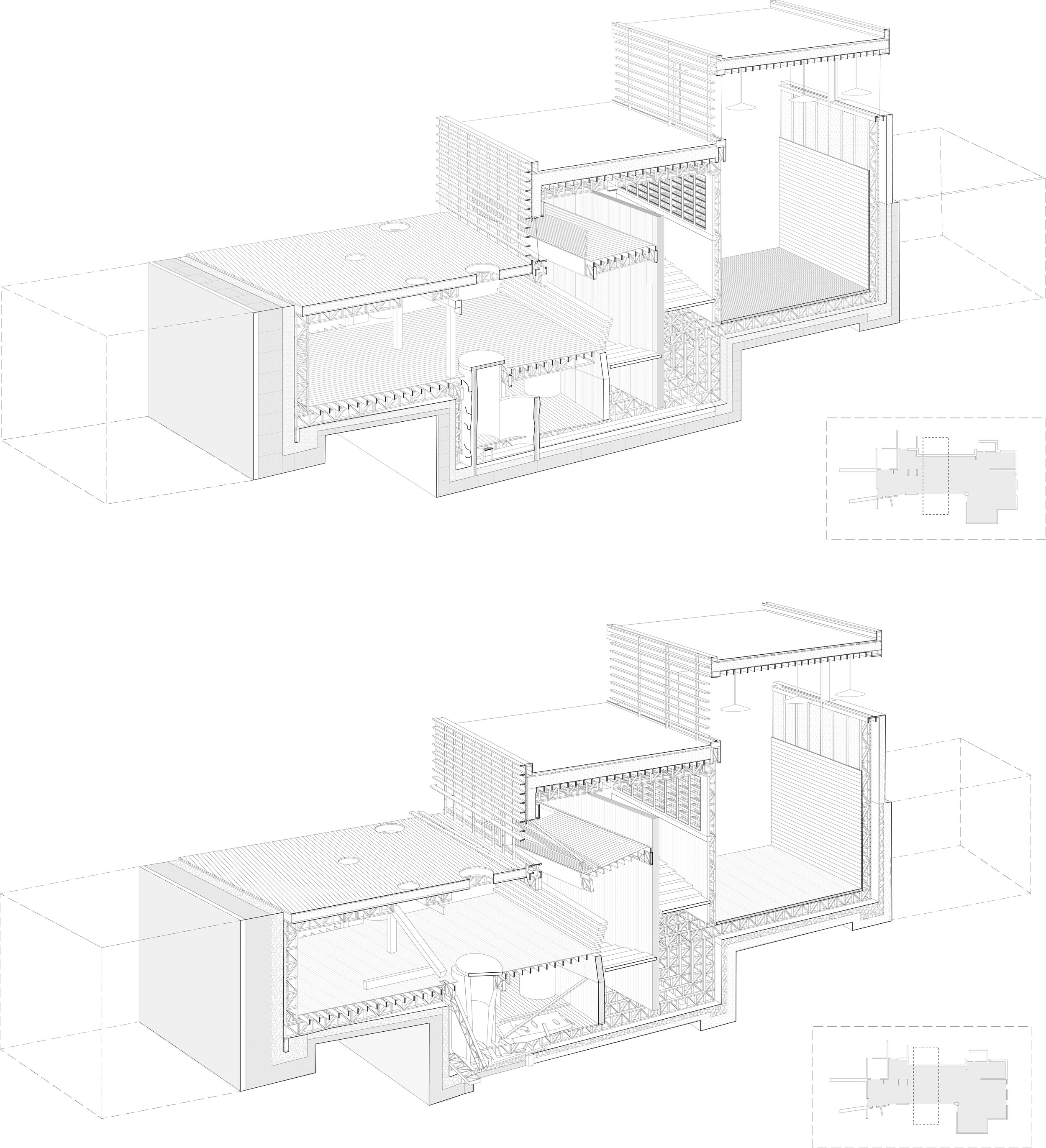
What resulted from this question was a building designed free of plastics, formaldehyde, or harmful chemicals of any kind; a building designed to return to the earth from which it rose; a building designed to rot, and in doing so would feed the earth and promote the growth of new trees long after its tenure had expired.
At a certain point the building would become no longer operational as it has been intentionally compromised by fungus, somewhere within the timeframe of 75-100 years, and left to rot while construction of the new facility would commence. As it returns to the earth, the seedlings would take root as the forest literally grows from within and the building joins the landscape on which it once stood.